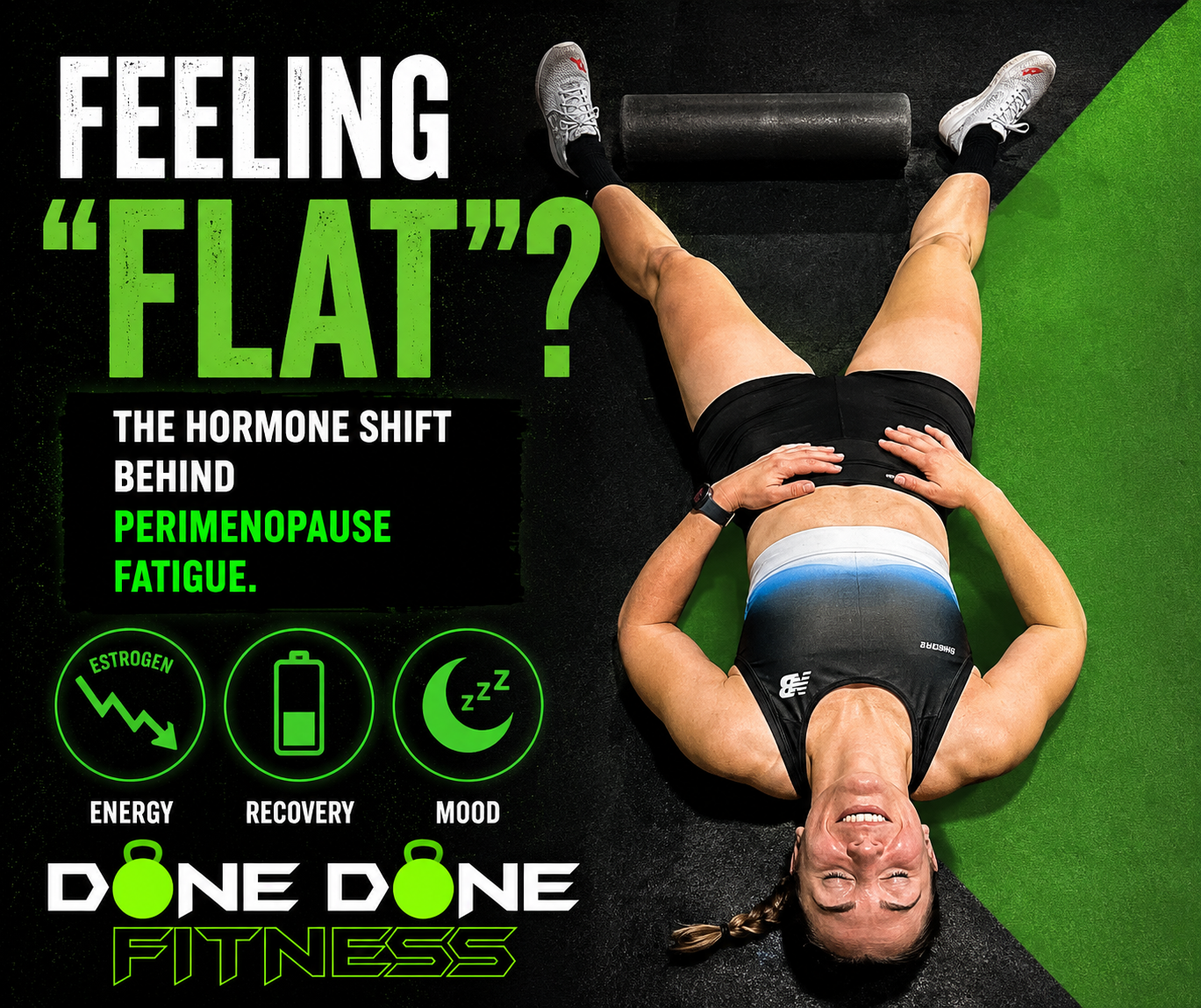

You know that feeling when your body used to respond… and now it feels like it left?
You are still training.
You are still trying to eat well.
You are still showing up.
But your energy is lower. Your recovery takes longer. Your muscles feel softer, flatter, or less “awake.” And no matter how many times someone says, “That’s just aging,” you know there is more to the story.
For many women in their 40s, 50s, and beyond, there often is.
One overlooked piece? Testosterone. Yes, testosterone.
Not the bodybuilder version. Not the teenage-boy version. The female hormone health version. Testosterone is not just a “male hormone.” Women naturally produce it too, and it plays an important role in daily energy, strength, muscle tone, drive, motivation, recovery, bone health, and physical performance. When levels shift during perimenopause or postmenopause, the symptoms can be subtle at first. Until they are not subtle anymore.
Low or less-available testosterone can feel like a slow leak in your daily battery.
You may notice:
And here is the frustrating part: A standard lab report may still say everything is “normal.” But normal does not always mean optimal for how you want to feel, train, recover, and live.
Most standard lab ranges are based on broad population averages. For women, total testosterone is often considered “normal” somewhere around 1–70 ng/dL. That is a wide range. Think of it like saying a house temperature between 55 and 85 degrees is “livable.” Technically? Sure. Comfortable? Depends where you are standing. A woman sitting at the low end of the range may be told her labs are fine while she feels exhausted, foggy, soft, unmotivated, and frustrated that her body is not responding the way it used to. That is why symptoms, lifestyle, training, sleep, stress, and the full lab picture matter.
Looking only at total testosterone is like looking at the total number of cars in a parking lot. Helpful? A little. But it does not tell you which cars can actually move. Your body has a transport system that determines how much testosterone is available for your tissues to use.
This is the total amount of testosterone in the body. It includes testosterone that is available and testosterone that is bound up and not easily usable. It is your warehouse inventory. But inventory sitting in a warehouse does not help much if none of it can get delivered.
SHBG stands for Sex Hormone-Binding Globulin.
Think of SHBG like a locked armored truck. When testosterone is bound tightly to SHBG, your body cannot easily use it. So a woman may have a decent total testosterone number, but if SHBG is high, much of that testosterone may be locked away.
Free testosterone is the small amount not bound to proteins. Bioavailable testosterone includes free testosterone plus the portion loosely bound to albumin. This is the usable side of the equation.
The question is not just: “How much testosterone do you have?”
The better question is: “How much can your body actually use?”
Perimenopause is not just “periods getting weird.” It is a full-body transition.
Hormones shift.
Sleep changes.
Stress tolerance changes.
Recovery changes.
Muscle-building becomes less forgiving.
The old “eat less and do more cardio” strategy starts backfiring hard. During perimenopause and postmenopause, ovarian hormone production naturally changes. At the same time, many women are dealing with high stress, poor sleep, under-eating, over-exercising, family demands, career demands, and years of putting themselves last. That combination can make the body feel like it is running on low battery mode all day.
This is why so many women say:“I am doing what used to work, but it is not working anymore.”
Correct. Because your body is not operating under the same rules anymore. That does not mean you are broken. It means the strategy has to change.
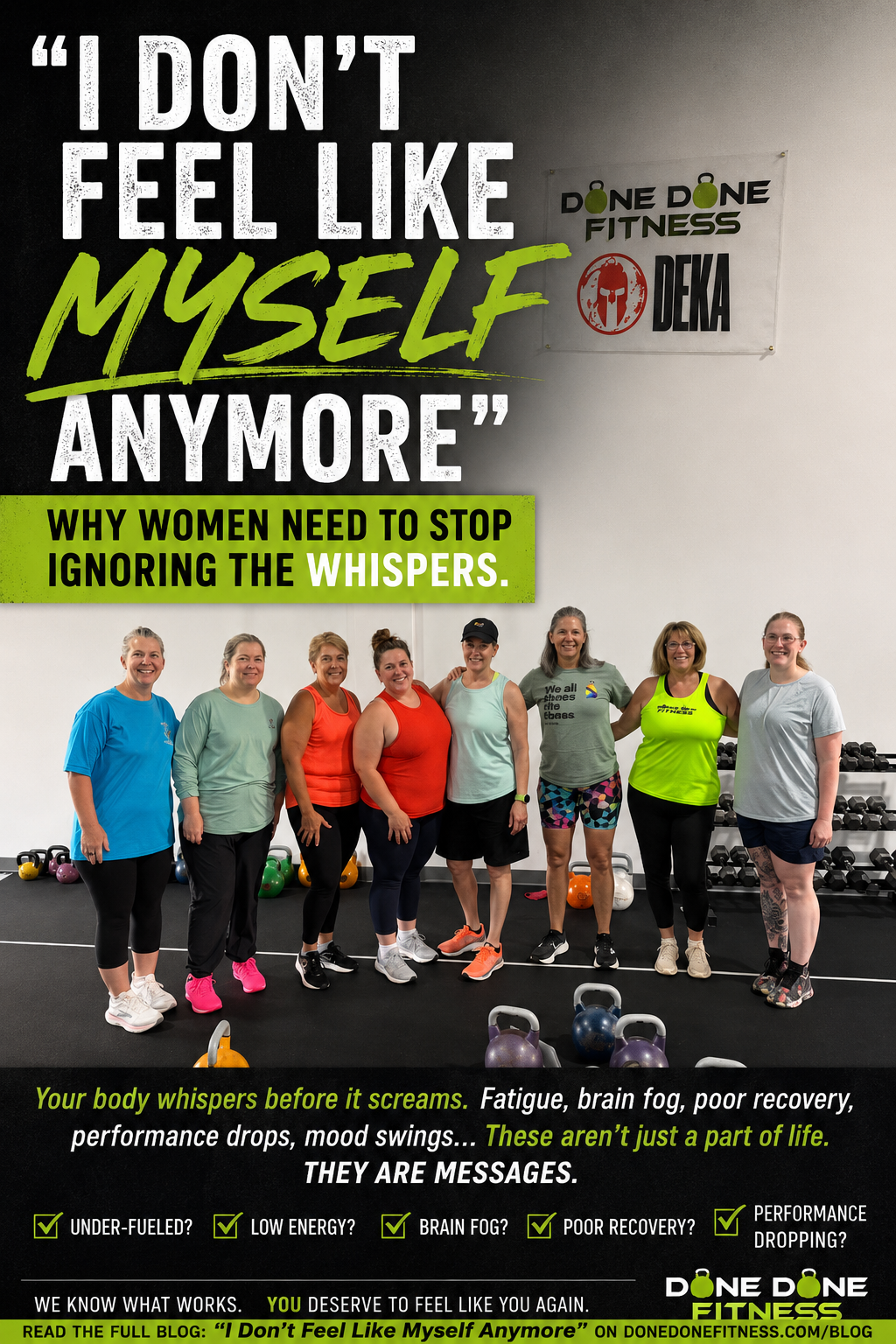
This is one of the most common complaints we hear from women over 40.
“My body feels softer.”
“My muscles feel flat.”
“I am working out, but I do not look or feel as strong.”
Testosterone plays a role in muscle strength, lean mass, recovery, and physical drive. When testosterone is low or less available, the body may have a harder time maintaining muscle tone and responding to training. But hormones are not the only factor.
Muscles can feel flat when:
In other words, the answer is rarely “just work harder.” That is lazy coaching. The real answer is found in the full picture.
Before jumping straight to medical options, the foundation matters. A lot. You cannot out-medicate chronic under-recovery, poor sleep, under-fueling, and stress overload forever. Lifestyle does not fix everything but it gives your body a much better operating system.
Progressive strength training is one of the most important tools for women over 40.
Not random workouts. Not just sweating. Not punishment circuits. Real strength training.
Squats. Hinges. Rows. Presses. Carries. Lunges. Pulling. Pushing. Progressive resistance.
Strength training tells the body: “Keep this muscle. We need it.” For women in perimenopause and menopause, strength training is not optional.
This is where many women get stuck. They are tired, stressed, not recovering, and frustrated.
So they eat less.
Then they feel worse.
Then their workouts suffer.
Then their muscles feel flatter.
That is not a plan.
That is digging.
Women over 40 often need a smarter nutrition strategy, not a more aggressive one. That means enough protein, enough calories, enough carbohydrates to support training, enough healthy fats, and less all-or-nothing dieting. Your metabolism does not love chaos. It loves signals. Fuel is a signal.
Stress is not just “I feel busy.” Stress is a biological demand. Training stress. Work stress. Family stress. Poor sleep. Under-eating. Pain. Inflammation. Never stopping. Your body does not separate all of that into cute little folders. It just sees load.
Recovery boundaries matter.
A walk.
A real rest day.
Earlier bedtime.
Breathing drills.
Less doom scrolling.
Better training distribution.
Saying no before your body forces you to.
Basic? Yes.
Powerful? Also yes.
Sleep is where a lot of recovery and hormone regulation happens and women in perimenopause often get hit hard here. Night sweats. Restless sleep. Early waking. Anxiety. Poor recovery. More fatigue. More cravings. Lower training tolerance.
The goal is not perfect sleep. The goal is anchored sleep. Consistent bedtime. Cooler room. Less alcohol. Less late-night stimulation. Better evening routines. Smarter training intensity. Your sleep is not a cute wellness habit…..It is your recovery appointment. Stop canceling it!!
Sometimes the lifestyle foundations are strong and symptoms still persist. This is when working with a qualified medical provider matters. A provider may evaluate hormone therapy options when appropriate, including topical creams or gels, subcutaneous micro-injections, or pellets. Each option has pros and cons.
This is medical territory. At Done Done Fitness, we do not diagnose, prescribe, or manage hormone therapy. We coach the lifestyle side. We help clients understand the basics, ask better questions, build strength, improve nutrition, manage stress, support recovery, and connect the dots between how they feel and how they live. When medical evaluation is needed, that belongs with a qualified hormone specialist or physician-reviewed program.
If you are a woman over 40 and you feel tired, flat, foggy, soft, or like your body stopped responding, you are not lazy. You are not weak. You are not failing but your old strategy may be outdated.
Perimenopause and menopause require a different approach. Less punishment. More precision. Less guessing. More data. Less “eat less, move more.” More strength, recovery, protein, sleep, and smart medical conversations when needed.
Your body is not broken.It is asking for better inputs and that is something we can work with.
We created an easy-to-read Optimal Hormone Resource Guide for women who want to better understand testosterone, SHBG, free testosterone, bioavailable testosterone, lifestyle drivers, and medical options to discuss with a qualified provider.
This guide is for educational and lifestyle optimization purposes only. It is not intended to diagnose, treat, prescribe, or replace medical care.
Download the full guide here:
.png)
.png)



.pdf.jpg)
.jpg)


.png)


